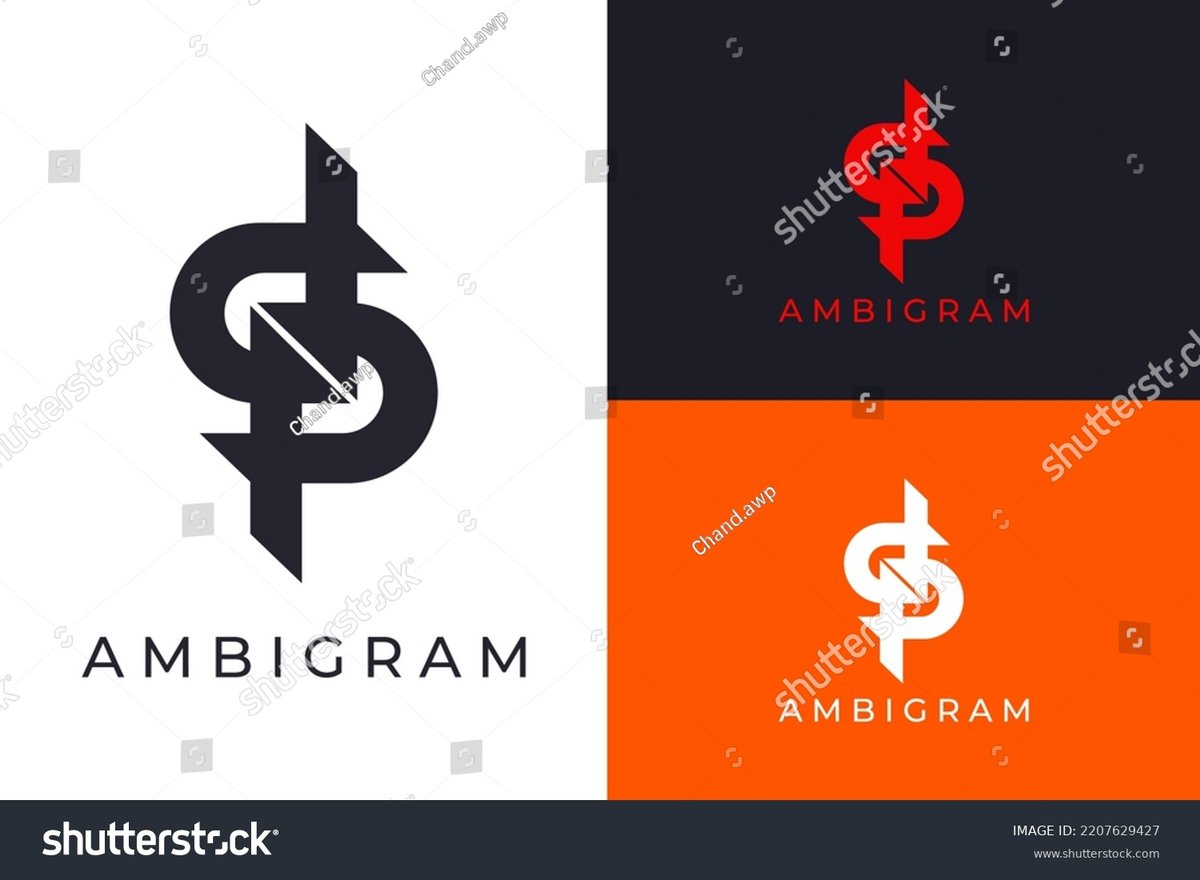
Ever look at a logo and think, "How did they do that?" Few feats of graphic design evoke that same sense of wonder as an ambigram – a word or phrase crafted to be read in more than one direction, orientation, or interpretation. This isn't just a party trick; mastering Ambigram Design Principles & Manual Creation Techniques unlocks a unique blend of art, geometry, and linguistic play, transforming mere text into a visually stunning, intellectual puzzle. It’s an art form that demands both rigorous attention to detail and boundless creative patience, much like a master craftsman perfecting their trade.
Ready to dive into the fascinating world where letters dance and meanings flip? Let’s unravel the secrets behind these clever typographical illusions.
At a Glance: Your Ambigram Journey Ahead
- Discover the Core Principles: Learn the fundamental rules governing ambigram creation, from symmetry types to negative space.
- Master Manual Techniques: Get a step-by-step guide to designing ambigrams by hand, focusing on letter morphing and iterative refinement.
- Avoid Common Traps: Understand the typical challenges designers face and how to overcome them.
- Elevate Your Craft: Explore advanced concepts and best practices to push your ambigram designs further.
- Start Creating: Gain the confidence and practical knowledge to begin designing your own captivating word art.
Beyond the Flip: What Makes an Ambigram Truly Clever?
An ambigram isn't simply a word that looks the same upside down or mirrored. It's a deeply thoughtful piece of design where every stroke, curve, and counter has been meticulously considered to serve a dual purpose. At its heart, an ambigram is a visual riddle, a testament to human ingenuity that capitalizes on perception. It’s why they’re so captivating in logos, tattoos, and graphic art – they offer a hidden layer of meaning and surprise, encouraging interaction and a second, closer look.
The true cleverness lies in how seemingly disparate letters can be coaxed into transforming into one another, maintaining both their individual identities and the overall word's legibility, regardless of orientation. It’s a delicate balance, a conversation between clarity and illusion.
The Core Design Principles: Your Ambigram Blueprint
Before you even pick up a pencil (or fire up your design software), understanding the foundational principles is paramount. These aren't just guidelines; they're the architectural rules that dictate an ambigram's very existence.
Symmetry Types: Choosing Your Foundation
The most crucial decision you'll make is the type of symmetry your ambigram will employ. This choice directly impacts how you approach letterform manipulation.
- Rotational Ambigrams (180-degree):
- The Most Common: This is what most people picture. A word that reads the same (or as a different word) when rotated 180 degrees.
- Mechanism: Each letter in the first reading must transform into a letter (or itself) in the second reading, after rotation. For example, an 'N' might become a 'Z', an 'M' a 'W', or an 'H' an 'H'.
- Challenge: Mapping the beginning letters to the end letters, and vice-versa, across the word's length.
- Reflectional Ambigrams (Mirror):
- Horizontal or Vertical: These read the same when reflected across an axis.
- Horizontal Reflection: Think of words like "TOT" or "TOY" that can be mirrored vertically. More challenging for full words as many letters don't mirror well.
- Vertical Reflection: Less common for words, often used for individual letters or short symbols.
- Challenge: The extreme transformation required for many letters makes full-word reflectional ambigrams very difficult and often results in less natural letterforms.
- Perceptual/Figure-Ground Ambigrams:
- The "Hidden" Message: These designs rely on the brain's ability to interpret positive and negative space. One word might be formed by the letters, while another is revealed in the background space between the letters.
- Mechanism: Often not about literal rotation or reflection, but about clever optical illusions.
- Challenge: Requires exceptional spatial awareness and the ability to design simultaneously for two readings.
- Chain/Continuous Ambigrams:
- Repetitive Flow: These typically involve a word repeating in a continuous loop, where the last letter flows seamlessly into the first letter of the next instance of the word.
- Mechanism: Often rotational, but designed to connect endlessly.
- Challenge: Maintaining legibility while ensuring a fluid, unbroken connection between word repetitions.
For manual creation, we'll primarily focus on the rotational ambigram, as it offers the broadest scope for letter play and is the most recognized form.
Letterform Morphing: The Heart of the Illusion
This is where the magic happens. The core of any ambigram is the successful transformation of one letter into another (or into itself) upon manipulation.
- Identify Common Pairs: Certain letters are natural partners. 'N' and 'Z' are classics. 'M' and 'W'. 'b' and 'q'. 'd' and 'p'. 'u' and 'n'. 's' and 's'. 'x' and 'x'.
- Deconstruct Letters: Break letters down into their fundamental components: ascenders, descenders, bowls, stems, serifs, dots, crossbars. How can these components be reinterpreted?
- Shared Structures: Look for shared structural elements between letters. An 'A' and a 'V' both have a pointed top. An 'H' and an 'I' share vertical lines.
- The "Trick" Strokes: Often, a single, carefully placed or altered stroke is the key to flipping a letter's identity. This might be adding a subtle curve, extending a line, or reshaping an interior counter.
Negative Space & Counters: Unsung Heroes
The space around your letters (negative space) and the enclosed or partially enclosed areas within them (counters) are just as important as the positive strokes themselves.
- Dual Purpose: In a successful ambigram, the negative space often subtly forms parts of the letters in the alternate reading.
- Legibility Aid: Well-defined negative space prevents letters from blending into an illegible blob. It helps differentiate forms.
- Aesthetic Balance: The overall visual balance of your design relies heavily on how you manage both positive and negative areas. Ignoring them is a common pitfall.
Consistency & Readability: The Ultimate Goal
An ambigram that's clever but unreadable is merely a jumble of lines. The final design must be legible in all intended orientations.
- Typographical Harmony: Strive for a consistent visual style (e.g., all sans-serif, all blocky, all elegant curves). This unity helps the illusion feel natural.
- Clarity Over Complexity: While complexity can be impressive, it should never come at the cost of readability. Simpler designs are often more impactful.
- Visual Flow: The letters should flow naturally, not look forced or disjointed in either orientation.
Manual Creation Techniques: A Step-by-Step Workshop
Now that you understand the principles, let's get practical. Manual ambigram creation is an iterative dance between planning and spontaneous problem-solving.
Phase 1: Preparation & Word Selection
- Choose Your Word Wisely:
- Length: Shorter words (4-7 letters) are often easier for beginners. Longer words present more complex mapping challenges.
- Letter Combinations: Words with letters that have good 'flipping' partners (N-Z, M-W) or symmetrical letters (H, I, O, X, S, Z) are ideal starting points. Avoid words with many unique, difficult-to-transform letters (e.g., 'F', 'J', 'R' can be tricky).
- Examples: "NOON," "SWIMS," "AMIGO," "CHUMP" (if you want to try 'chump' rotating to 'dunk' or similar).
- Brainstorming Letter Pairings:
- Write your chosen word. Below it, write the flipped version of the word (e.g., for "NOON," you'd be looking for N->N, O->O, O->O, N->N). For a word like "SWIMS" to rotate into "SWIMS", you'd map S->S, W->M, I->I, M->W, S->S.
- List out the letter transformations you need:
- Word: S - W - I - M - S
- Flipped: S - M - I - W - S (read from right to left, inverted)
- Mappings: S <-> S, W <-> M, I <-> I
- Consider how each letter will morph. A simple symmetrical letter like 'I' is easy. A 'W' transforming into an 'M' is a classic.
- Set Up Your Canvas:
- Grid Paper is Your Friend: Especially for beginners, grid paper provides structure and helps maintain consistent proportions.
- Light Sketching: Start with very light pencil lines. You'll be erasing a lot.
- Define Baseline and X-height: Establish the top and bottom guides for your letters, along with the x-height (the height of lowercase letters without ascenders/descenders). This ensures visual consistency.
Phase 2: The Letter Mapping Process
- Start with the Easiest Letters: Tackle symmetrical letters or those with clear transformations first (e.g., H, I, O, X, or N to Z). This builds confidence and provides a foundation.
- Break Down Letter Components:
- Instead of thinking "N," think "two vertical strokes and a diagonal."
- Instead of "Z," think "two horizontal strokes and a diagonal."
- How can you draw a common structure that fulfills both?
- The "Skeleton" Approach:
- Draw the core, essential strokes of your first letter. Then, rotate your paper 180 degrees.
- Can you see the skeleton of the target letter in the rotated form?
- Gradually add or adjust strokes to achieve the target letter, while always ensuring the original letter is still legible when the paper is in its initial orientation. This back-and-forth is key.
- Focus on Shared Space: Think about a 'b' becoming a 'q'. The vertical stem of the 'b' becomes the ascender of the 'q'. The bowl of the 'b' becomes the bowl of the 'q'. It's all about shared anatomical elements.
- Dealing with Asymmetry: If a word has an odd number of letters, the middle letter must be symmetrical on its own (e.g., 'I', 'O', 'X', or a specially designed letter that looks like itself when rotated). If the word is "AMIGO" (5 letters) and flips to "OGIMA" (A->A, M->G, I->I, G->M, O->O), the middle 'I' must remain an 'I' upon rotation.
Phase 3: Shaping & Refining the Forms
This is where the rough sketches start to become polished letterforms.
- Manipulate Strokes & Curves:
- Serifs: Can serifs be strategically added or removed to aid transformation? A serif on an 'L' might become part of a 'T' when flipped.
- Ascenders/Descenders: How do you handle letters that extend above or below the x-height? They must transform into ascenders/descenders of corresponding letters in the flipped word.
- Negative Space as a Guide: As you draw, constantly look at the white space. Does it form recognizable shapes? Does it hinder the reading of either orientation?
- Connect Letters Smoothly:
- Ambigrams often feature ligatures or custom connections between letters. These aren't just decorative; they can be vital in creating the illusion. A connection from the top of one letter might serve as the bottom of the next when flipped.
- Ensure connections don't create awkward gaps or merge letters into an illegible mass.
- Handling Difficult Letters:
- Some letters, like 'E', 'F', 'J', 'R', are notoriously hard to transform symmetrically. This is where creativity truly shines. You might need to:
- Distort: Gently bend or stretch parts of the letter more than usual.
- Embellish: Add subtle flourishes that serve a dual purpose.
- Abstract: Move slightly away from the traditional letterform, as long as readability isn't compromised.
- Sometimes, an 'E' can become an 'M' or 'W' with a lot of creative manipulation.
- Trial and Error is Your Best Friend:
- This is not a linear process. You'll draw, erase, redraw. You'll achieve one letter's transformation only to realize it breaks another.
- Keep your initial sketches light. Be prepared to start over sections, or even the whole word, multiple times. Patience, as Ambigramania.com points out, is crucial.
- Don't be afraid to walk away and come back with fresh eyes.
Phase 4: Testing & Iteration
Your design isn't finished until it passes the ultimate test.
- The Flip Test (180-degree rotation):
- Draw your ambigram. Now, physically rotate the paper 180 degrees. Read it. Is it legible? Does it look like the intended word?
- Pay attention to clarity. Are there any parts that look ambiguous or force the reader to guess?
- The Mirror Test (for reflectional, but useful for all):
- Hold your design up to a mirror. Sometimes seeing it in reverse or slightly altered helps you spot inconsistencies or areas of weakness.
- Distance Test:
- Step away from your design. Look at it from across the room. Does it still hold up? Or do parts blur? This helps test overall legibility.
- Get Fresh Eyes:
- Show your design to others. Ask them what they read in both orientations. Their unbiased feedback is invaluable. If they struggle, you know where to refine.
- Iterate, Iterate, Iterate:
- Based on your tests and feedback, go back to Phase 3. Refine strokes, adjust spacing, clean up connections. This cyclical process continues until both readings are clear, balanced, and aesthetically pleasing.
Common Pitfalls and How to Sidestep Them
Creating ambigrams is a journey filled with delightful "aha!" moments and frustrating dead ends. Being aware of common mistakes can save you a lot of time and heartache.
- Sacrificing Readability for Symmetry: This is perhaps the biggest trap. You might create a perfect 180-degree flip, but if neither orientation is clearly legible, you’ve missed the point. Always prioritize clarity in both readings. Sometimes, a slightly less "perfect" symmetry that's highly readable is better than a geometrically perfect but confusing one.
- Over-Complication: Beginners often try to force complex letter transformations or too many flourishes. This can lead to a cluttered design where individual letterforms are lost. Start simple, master the basics, then add complexity sparingly and purposefully.
- Ignoring Negative Space: As mentioned, the empty space is a design element. If your negative space is uneven, creates distracting shapes, or clutters the design, it will detract from the ambigram's effectiveness. Actively design the spaces between and within your letters.
- Inconsistent Styling: Mixing highly ornate letters with very plain ones, or using wildly different stroke weights, can make an ambigram look disjointed. Strive for a unified typographic style across the entire design.
- Giving Up Too Soon: Ambigram design requires significant patience and persistence. Some words are incredibly difficult, and finding the solution can take hours, days, or even weeks of iterative work. Don’t get discouraged by early failures; they're part of the learning process. Keep experimenting, as Ambigramania.com emphasizes, and have fun with it!
Beyond the Basics: Advanced Ambigram Concepts
Once you've mastered the fundamentals, a whole new world of ambigram possibilities opens up.
- Multi-Word Ambigrams: Creating an ambigram where "NIGHT" rotates to "DAY" (or a different word entirely) adds another layer of conceptual depth. This requires even more complex letter mapping and often creative license with letterforms.
- Figure-Ground Ambigrams: These are particularly challenging as they demand designing the primary word while simultaneously sculpting another word or image from the negative space. M.C. Escher's influence is strong here.
- Ambigrams in Logos and Branding: Many famous logos subtly incorporate ambigrammatic elements (though not always full words). Designing one for a brand requires not only technical skill but also a deep understanding of branding principles and message delivery.
- Leveraging Digital Tools as an Aid: While manual techniques build fundamental understanding, digital tools can greatly speed up the refinement process. Software like Adobe Illustrator allows for precise vector manipulation, mirroring, rotation, and non-destructive editing. For inspiration or to kickstart ideas, you can even Generate ambigrams for free using specialized online tools, then take those as a starting point for manual refinement and personalization. These tools are fantastic for quickly testing concepts before diving into detailed manual drawing.
Your Ambigram Toolkit: Recommended Practices
To truly excel, equip yourself with the right mindset and materials.
- The Humble Pencil and Paper: This is where every great ambigram begins. Good quality paper, a range of pencils (2H for light sketches, HB for definition, 2B for darker lines), and a good eraser are essential.
- Tracing Paper: Invaluable for iterating. You can sketch a base layer, then place tracing paper over it to try variations without erasing your original.
- A Mirror: Essential for testing reflectional ambigrams and for getting a fresh perspective on any design.
- Digital Software: Once your manual sketches are strong, vector graphics software (like Adobe Illustrator or Inkscape) allows you to digitize, refine, scale, and color your ambigram with professional precision.
- Typography Resources: A good understanding of typography – letter anatomy, kerning, tracking, type classifications – will significantly enhance your designs. Study different typefaces to see how letters are constructed.
- Practice, Practice, Practice: Like any skill, ambigram design improves with consistent effort. Don't be afraid to experiment with different words, styles, and symmetry types. Each attempt, successful or not, teaches you something new about letterforms and perception.
Your Next Flip: Embracing the Ambigram Challenge
Designing ambigrams is more than just drawing; it's a journey into visual linguistics, a delightful blend of logical problem-solving and unbridled artistic expression. It teaches you to see letters not just as static symbols, but as flexible, adaptable forms ready to play hide-and-seek with the viewer.
By diligently applying these Ambigram Design Principles & Manual Creation Techniques, you're not just learning to draw; you're learning to think differently about words and their inherent visual potential. So, grab a pencil, choose your word, and get ready to create something truly magical. The world is waiting for your clever flips.