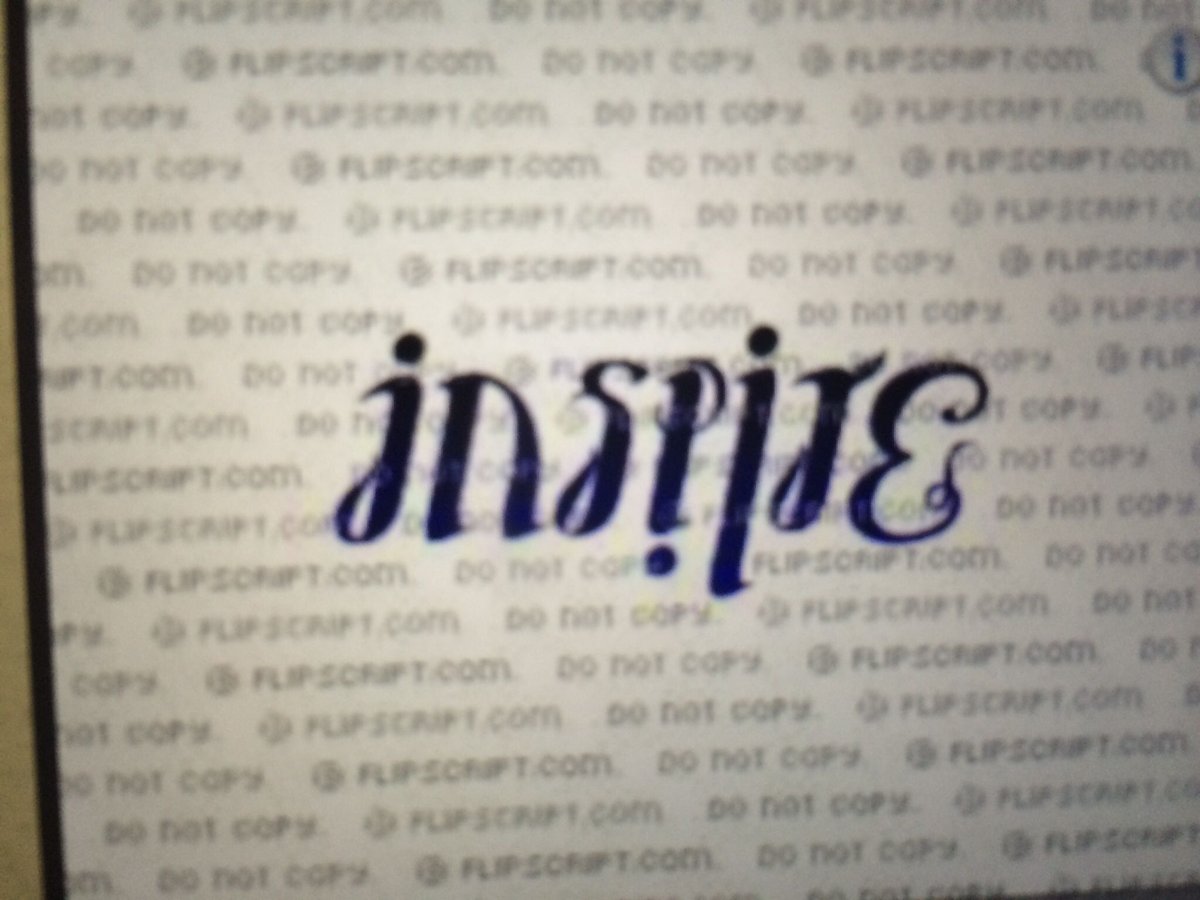
Ever looked at a word and felt like it was playing tricks on your eyes, revealing a hidden message or an entirely new word when you simply spun it around? If so, you've likely encountered an ambigram. Far more than just clever optical illusions, what are ambigrams? History, types, and examples reveal a captivating blend of linguistic art, visual perception, and symmetrical design that challenges how we see and read.
These fascinating typographical designs aren't just cool party tricks; they're a testament to the ingenious ways humans manipulate letters and shapes to create deeper meanings and surprising reveals. They invite you to look closer, think differently, and appreciate the fluid nature of written language.
At a Glance: Decoding Ambigrams
- What they are: Designs (words, phrases, symbols) that can be read in multiple ways—typically when rotated 180 degrees or reflected.
- Their origin: The concept of symmetrical writing existed for centuries, but the term "ambigram" was coined and popularized by Douglas Hofstadter in the 1970s.
- Main types: Rotational (reads same or different when spun), Mirror-Image (reads same when reflected), and 3D (a physical object with different readings from opposing angles).
- Why they matter: They blend logic and art, highlighting the dual nature of letters as both meaning-carriers and abstract shapes, challenging visual perception.
What Exactly Are Ambigrams? More Than Just Clever Puzzles
At its heart, an ambigram is a visual word puzzle designed with a twist—sometimes literally. Imagine a word or phrase that, when rotated 180 degrees, still reads as the same word, or perhaps morphs into an entirely different one. Or picture a logo that looks exactly the same when held up to a mirror. That's the magic of an ambigram.
The term itself is a thoughtful mashup: "ambi-" comes from the Latin for "both," while "-gram" signifies "writing" or "letter." So, an ambigram is quite literally "both writings." It’s a form of typographical art that masterfully blends optical illusions, principles of symmetry, and human visual perception with a surprising dash of linguistic logic. The result is a captivating effect that keeps you looking, questioning, and ultimately, admiring the sheer cleverness of its design. It's not just about aesthetics; it's about a conversation between form and function, where the form becomes the function in an unexpected way.
A Brief History of Topsy-Turvy Text: From Ancient Ideas to Modern Mystique
While the official "ambigram" label is relatively new, the idea of symmetrical writing has been around for centuries, simmering in various forms across cultures. Think of ancient symbols or calligraphic traditions that inherently possessed a certain balance or repetitive pattern. Early examples often leaned towards simple, naturally symmetrical words or short phrases that could be read in multiple orientations without much artistic manipulation.
However, the true birth of the ambigram as a recognized art form, with its own name and dedicated exploration, arrived in the 1970s. It was Douglas Hofstadter, a visionary professor of cognitive science, who coined and popularized the term "ambigram" in his groundbreaking 1979 book, Gödel, Escher, Bach: An Eternal Golden Braid. Hofstadter used these intriguing designs to illustrate complex ideas about symmetry, perception, and recursive structures in art, mathematics, and music. He saw them as playful yet profound examples of how our minds make sense of patterns and transformations.
The art form truly exploded into mainstream consciousness thanks to the work of John Langdon, an artist and designer whose ambigrams were prominently featured in Dan Brown's bestselling 2000 novel, Angels & Demons. Langdon's intricate and elegant designs for words like "Illuminati," "Angels," and "Demons" became central to the plot, serving as mystical symbols and crucial clues. For many, this book was their first introduction to the concept, revealing ambigrams as not just clever tricks, but powerful narrative devices. Langdon’s collaboration with Brown wasn’t just a literary moment; it propelled ambigrams from a niche interest into a widely recognized and appreciated art form, sparking curiosity and inspiring countless designers and enthusiasts.
Unpacking the Main Types of Ambigrams: A Gallery of Clever Designs
Ambigrams aren't a monolithic art form; they come in several distinct flavors, each with its own set of design challenges and visual effects. Understanding these types helps you appreciate the specific genius behind each creation.
Rotational Ambigrams: The Classic Flip
This is arguably the most recognized and iconic type of ambigram, the one that most people picture when they hear the word. A rotational ambigram works by being designed so that it reads the same (or reads a different word) after being rotated 180 degrees.
- Reads the Same: Think of words like "NOON," "SWIMS," or "MOW." These are naturally symmetrical words that, when turned upside down, retain their legibility and meaning. However, true artistic rotational ambigrams take non-symmetrical words and subtly reshape their letters so they transform into legible characters from both orientations. Imagine a designer morphing an 'E' into an 'M' or a 'P' into a 'D' when viewed upside down—that's the skill involved.
- Reads a Different Word (Two-Name Ambigram): These are particularly captivating. One word is legible right-side-up, and a completely different word appears when rotated 180 degrees. For instance, the word "YES" might transform into "NO," or "LOVE" into "HATE." This requires an even higher level of artistic skill and conceptual thinking, as the designer must find ways for each character of the first word to cleverly disguise a character of the second word in its inverted form. The most challenging designs make this transformation seem effortless, almost magical.
Mirror-Image Ambigrams: The Reflection Test
Also known as bilateral or reflective ambigrams, this type relies on symmetry across a central axis. A mirror-image ambigram remains legible when viewed through a mirror or when flipped horizontally or vertically.
- Horizontal Reflection: The design reads the same when reflected horizontally (as if you placed a mirror to its side). Many corporate logos utilize this principle to maintain brand recognition, regardless of the angle or reflective surface they appear on. Think of perfectly symmetrical letters like 'A', 'M', 'T', 'W', 'V', 'X', 'Y' – these are common starting points.
- Vertical Reflection: The design reads the same when reflected vertically (as if you placed a mirror above or below it). Less common for full words due to the scarcity of naturally vertically symmetrical letters, but often seen in individual character designs or abstract symbols.
- Practical Applications: Mirror-image ambigrams are often employed in logo design, where continuity and legibility across various mediums—from storefront windows to car decals, where reflection might occur—are crucial. A well-designed mirror ambigram ensures your brand looks consistent whether it's seen directly or in a reflection.
3D Ambigrams: Sculpting the Illusion
This is a more modern and highly technical variation that pushes ambigrams beyond two-dimensional drawing into physical space. A 3D ambigram is a physical object, often a sculpture or carefully constructed shape, designed to read one word or symbol from one viewing angle and a different word or symbol from an opposite 180-degree view.
- Precision Engineering: Creating a 3D ambigram requires an understanding of precise geometry, optics, and material science. It involves shaping an object such that the shadows it casts, or the contours it presents, form different legible words when viewed from specific, contrasting perspectives. Light and shadow play crucial roles here.
- Dynamic Perception: Unlike static 2D designs, 3D ambigrams offer a dynamic perceptual experience. Walking around one of these sculptures reveals its hidden depths, transforming before your eyes. They are a powerful demonstration of how context and perspective profoundly alter our interpretation of form.
- Innovations: With advancements in 3D printing and digital design software, creating complex 3D ambigrams has become more accessible, allowing artists to experiment with intricate forms and messages.
Other Niche Ambigram Variations
While the rotational, mirror-image, and 3D types are the most prominent, the world of ambigrams is vast and creative. Other variations include:
- Perceptual Ambigrams: These rely on optical illusions where a word can be read as two different words depending on how the viewer interprets certain ambiguous letterforms. One way sees an 'E' as an 'A', for instance.
- Chain Ambigrams: Where words interlock, often forming a circular or repeating pattern.
- Figure/Ground Ambigrams: Where the word can be read both in the main text and in the negative space around it.
- Symbiotograms: A specific type of rotational ambigram where one word rotates to become a different word. These are incredibly difficult to design.
Each type challenges our perception and understanding of typography in unique ways, pushing the boundaries of what written language can do.
The Art and Logic Behind the Illusion: How Ambigrams Work
At its core, an ambigram works by exploiting the flexible nature of letterforms and the human brain's incredible capacity for pattern recognition and interpretation. We're wired to make sense of shapes, even when they're presented ambiguously.
When a designer crafts an ambigram, they're essentially playing a high-stakes game of visual charades. They're taking familiar letters, which usually have a fixed orientation and meaning, and bending, stretching, or fusing them so they can serve dual purposes. An 'N' might be subtly altered to also look like a 'Z' when inverted, or a 'B' might contain the negative space that forms a 'C' in a different context.
The process demands both logical problem-solving and artistic intuition. It's about breaking down letters into their fundamental strokes and curves, then seeing how those components can be rearranged or combined to form new, legitimate characters under a different orientation or reflection. This blend of science (the rules of symmetry, geometry) and art (aesthetics, fluidity of design) is what makes ambigrams so compelling. They're not just about making a word readable in two ways; they're about making that transformation look natural, elegant, and intentional.
Where Do Ambigrams Show Up? Practical Applications and Pop Culture
Ambigrams, once a niche interest for mathematicians and typographers, have found their way into various aspects of our daily lives, often without us even realizing it. Their ability to convey multiple meanings or simply to look incredibly clever makes them highly versatile.
- Logos and Branding: This is one of the most common and effective applications. A company whose logo reads the same upside down or in a mirror projects an image of cleverness, balance, and stability. John Langdon famously designed the ambigrammatic "Angels & Demons" logo for the movie adaptation of Dan Brown's novel. Another excellent example is the "new man" logo for the band Nine Inch Nails, where "NIN" can be read from any angle of a rotated square. Ambigrams in branding create memorable, unique, and often conversation-starting visual identities.
- Book Covers and Album Art: Beyond Angels & Demons, ambigrams have graced the covers of numerous books and music albums, adding an immediate layer of intrigue and hinting at hidden meanings within the content. They draw the eye and encourage a second, closer look.
- Tattoos and Personal Art: For many, ambigrams represent a powerful form of personal expression. Having a word like "LOVE" transform into "HATE" or "LIGHT" into "DARKNESS" (or vice-versa) can be a profound statement about duality, personal philosophy, or the complexities of life. They are a unique way to wear art that literally holds a double meaning.
- Advertising and Marketing: The "wow" factor of an ambigram can make a campaign instantly memorable. It's an effective way to grab attention and spark curiosity, encouraging consumers to engage with the message more deeply.
- Puzzles and Games: Naturally, ambigrams are a perfect fit for puzzles, brain teasers, and recreational typography. They challenge viewers to find the hidden reading, making them a fun and engaging mental exercise.
The enduring appeal of ambigrams lies in their ability to surprise and delight. They remind us that the familiar can always hold a secret, waiting to be discovered with a shift in perspective.
How Do Ambigrams Work? The Magic of Letterforms
Understanding how ambigrams achieve their illusion involves appreciating both the designer's skill and the human brain's perceptual quirks. It's a dance between intentional design and subconscious interpretation.
Think about individual letters. Many have inherent symmetries: an 'A' has vertical symmetry, an 'H' has both vertical and horizontal, an 'O' has rotational. The challenge, and the magic, comes when you take asymmetrical letters and force them into a symmetrical role.
A designer starts by identifying potential shared visual elements between letters that will transform. For a rotational ambigram, an 'M' might be designed to become a 'W' when inverted, or an 'S' might perfectly flip into another 'S'. This often involves:
- Shared Strokes: Finding common lines or curves.
- Negative Space: Utilizing the empty space around a letter to form part of the inverted letter.
- Stylistic Modifications: Carefully altering serifs, flourishes, or the weight of certain lines without compromising legibility.
Your brain plays a crucial role too. When you see a written word, your brain doesn't just process individual letters; it rapidly recognizes the overall shape of the word. With an ambigram, the designer creates a shape that, when viewed from a new orientation, triggers your brain to recognize a different (or the same) word-shape. It’s an act of clever deception, where the raw visual data is manipulated just enough for your cognitive filters to interpret it in two distinct ways. This makes ambigrams not just typographical art, but also fascinating psychological experiments in perception.
Crafting Your Own Ambigrams: A Peek Behind the Curtain
Creating an ambigram, especially a sophisticated one like a two-name rotational design, is far from a simple task. It's a meticulous process that combines artistic flair, an understanding of typography, and a hefty dose of patience.
Generally, the process involves these key steps:
- Choose Your Words: This is often the hardest part. Some word pairs lend themselves better to ambigrammatic design than others due to shared letter characteristics. Short words with many naturally symmetrical letters (like 'A', 'H', 'I', 'M', 'O', 'T', 'U', 'V', 'W', 'X', 'Y') are easier starting points for rotational ambigrams that read the same. For two-name ambigrams, finding letters in the first word that can subtly transform into letters of the second word when rotated or reflected is the core challenge.
- Sketching and Experimentation: This is where the bulk of the work happens. Designers often start with basic forms, overlaying the words and looking for shared stroke patterns or areas that can be manipulated. For a rotational ambigram, you might write the first word normally, and then write the second word (or the same word inverted) upside down directly on top of it. This helps visualize how parts of letters can overlap or connect.
- Letter by Letter Transformation: Each letter is a mini-puzzle. How can an 'E' become an 'A' when flipped? How can the negative space of a 'P' suggest a 'D'? This requires breaking down letters into their component curves, lines, and serifs, then seeing how those components can be cleverly repurposed.
- Refinement and Legibility: Once a basic structure is found, the extensive refinement process begins. The goal is not just to make it readable in both orientations, but to make it elegantly readable. This involves adjusting curves, weights, spacing, and serifs to ensure both interpretations are clear, balanced, and aesthetically pleasing. This stage can involve numerous iterations and digital manipulation using graphic design software.
The sheer difficulty of this process means that many people rely on specialized tools if they want to create ambigrams for free without investing years in typographical design. While these generators can produce simpler ambigrams, the truly artistic and complex designs still require the touch of a human master.
Common Questions About Ambigrams, Answered
Navigating the world of ambigrams can bring up a few common curiosities. Here are some quick answers to frequently asked questions:
Are all words possible to turn into ambigrams?
No. While a skilled designer can work wonders, not every word or phrase can be perfectly rendered as an ambigram, especially complex two-name rotational ones. The more letters, the more unique the letter combinations, and the less inherent symmetry, the harder it becomes. Some words simply don't have the structural flexibility to morph convincingly.
What’s the difference between an ambigram and an anagram?
An ambigram is a visual phenomenon where the design of the word changes its reading based on orientation or reflection. An anagram, on the other hand, is a linguistic puzzle where the letters themselves are rearranged to form a new word or phrase (e.g., "listen" becomes "silent"). They operate on entirely different principles – visual versus lexical.
Are ambigrams always symmetrical?
Most common ambigrams (rotational, mirror-image) rely heavily on symmetry. However, some advanced or niche types, like perceptual ambigrams, might play with optical illusions and ambiguity rather than strict geometric symmetry. The core idea is still dual readability, even if the symmetrical transformation isn't always perfectly geometric.
Is it hard to create ambigrams?
Yes, creating high-quality, complex ambigrams is very challenging. It requires a deep understanding of typography, geometry, and visual perception, along with significant artistic skill and patience. Simpler rotational ambigrams for words with inherent symmetry are easier, but transforming complex, asymmetrical words into elegant ambigrams is a master skill.
Beyond the Words: Why Ambigrams Matter
Ambigrams are more than just clever visual tricks; they represent a profound intersection of art, language, mathematics, and psychology. They challenge us to perceive letters and words not just as simple carriers of meaning, but as dynamic shapes and forms. In doing so, they highlight several key concepts:
- The Fluidity of Perception: Ambigrams demonstrate how our perception is highly contextual. A slight change in orientation can completely alter what we see and understand, reminding us that reality itself can shift with perspective.
- The Power of Design: They showcase the incredible power of design to manipulate and persuade. A well-crafted ambigram is not just aesthetically pleasing; it's intellectually engaging, forcing you to participate in its illusion.
- The Beauty of Symmetry: At their heart, many ambigrams celebrate symmetry, a fundamental principle found throughout nature and art. They find hidden order and balance in seemingly chaotic arrangements of letters.
- A Bridge Between Disciplines: From Hofstadter using them to explain cognitive science to Langdon employing them in best-selling novels, ambigrams serve as a fascinating bridge between logical disciplines and creative arts, proving that these fields are often more interconnected than we imagine.
They remind us that the written word is a powerful, malleable medium, capable of conveying messages not just through its explicit meaning, but also through its implicit form.
Ready to Flip Your Perspective? Your Next Steps
Whether you've just discovered the magic of ambigrams or have been a long-time admirer, there's always more to explore. These unique typographical creations invite us to look at the world a little differently, to question our initial perceptions, and to appreciate the intricate beauty hidden within everyday forms.
If you're intrigued by the blend of logic and art that ambigrams offer, consider these next steps:
- Explore more examples: Seek out portfolios of renowned ambigram artists like John Langdon or Scott Kim. Their work offers endless inspiration and demonstrates the incredible versatility of the form.
- Try a generator: For a quick taste of ambigram creation, experiment with online ambigram generators. While they might not produce the nuanced artistry of a human designer, they can still create fun, simple designs and illustrate the core concept.
- Look for them in the wild: Keep an eye out for ambigrammatic designs in logos, tattoos, and pop culture. Once you know what to look for, you'll start spotting them everywhere!
- Dive deeper into design: If you're creatively inclined, research the principles of typography and symmetrical design. Understanding these fundamentals is the first step towards potentially crafting your own ambigram masterpieces.
Ambigrams are a delightful testament to human ingenuity—a reminder that sometimes, the most profound insights come from simply turning things on their head.